Food For The Poor in Haiti
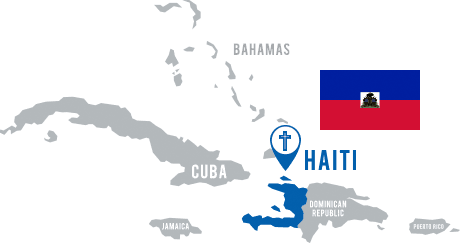
Food For The Poor began its work in Haiti in 1986, and since that time has developed strong relationships and partnerships with individuals, organizations and communities throughout the island. This level of experience and connectivity enabled FFP to respond immediately when the Jan. 12, 2010 earthquake struck. Food For The Poor was able to quickly respond because there were goods in the Port-au-Prince warehouse, containers already were cleared in the port, and more containers were on the way when the earthquake hit. The same rapid response Food For The Poor took during the earthquake crisis was activated when the cholera outbreak started.
Current FFP projects in Haiti encompass aquaculture, animal husbandry, agricultural development, orphan-support projects, housing, sanitation, community development, water improvement, school construction and support, feeding program support, fishing villages, alternative energy introduction, and medical improvement.
With more than a million people still living in tent cities, one of our more urgent priorities is building homes.
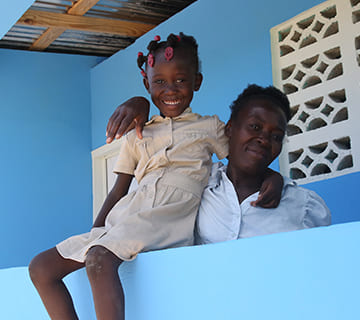
- Since 1986, 14,812 homes have been built in Haiti; including more than 2,000 two-room concrete-block homes from the time of the 2010 earthquake to the end of 2010. These sturdy homes provide the poor with shelter, safety and brighter futures.
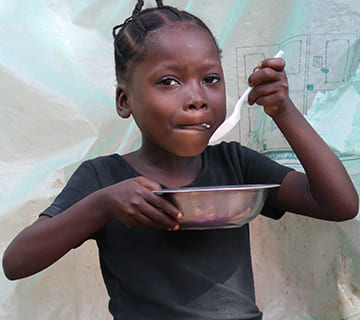
- In addition to Food For The Poor's daily feeding program in Port-au-Prince, trailer-loads of food (such as rice, beans, flour, powdered milk and oil) are distributed to a variety of organizations throughout the country. Schools, orphanages and churches depend on these items to carry out feeding programs and for distribution to local families.
- Food For The Poor is in the process of installing 10 water filtration units in the Cap-Haitien region. Food For The Poor completed 110 water projects in 2010, and with the help of Water Missions International, has installed 30 water filtration units in the Artibonite region where the cholera outbreak started. Each unit can purify and chlorinate up to 10,000 gallons of water a day.
- Food For The Poor works with three orphanages as part of the Angels Of Hope program. Through this program, 371 children receive shelter, an education and most importantly, love.
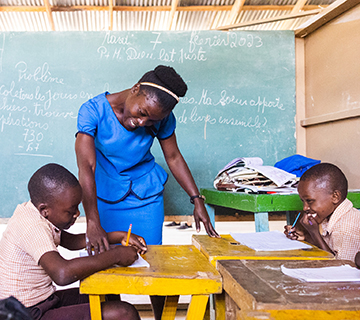
- Food For The Poor provides schools with computers, furniture, textbooks, uniforms, and educational materials and supplies. We also build and repair schools, and fund the operating expenses of several institutions (including feeding programs which raise attendance and improve student performance).
- Micro-enterprise projects are vital to Haiti’s future. Fishing villages and aquaculture projects are providing residents with new food sources, and entire communities with a gainful source of income.
- 33 fishing villages in full operation in a variety of coastal locations, and 10 villages are being planned for future development.
- 40 tilapia ponds have been completed throughout the country. Another eight tilapia ponds and five pangasius (Basa) hatching ponds are under construction, with various future sites being considered for aquaculture projects.
- More than 20 Food For The Poor projects in Haiti are geared toward production of other food products – chickens, goats, cows, fruit trees, and vegetable farms.
- By the end of 2010, Food For The Poor had distributed more than 350,000 fruit trees. In addition to helping small subsistence farmers, these projects help villages set up community farms where residents can enjoy harvests of peppers, corn, and other healthy vegetables.
- Animal husbandry projects provide individual families with their own animals to breed and consume – predominantly goats, chickens and cows. In addition, farms are being established to raise strong, healthy animals to perpetuate the distribution process.
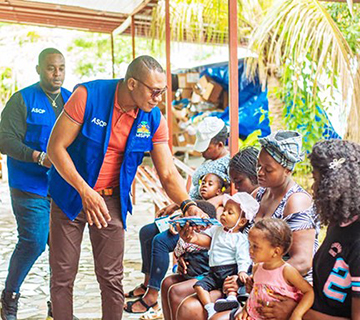
- Even basic medical care is unaffordable for most Haitians, and those living in rural areas suffer the most. In addition to operating a clinic at our warehouse compound in Port-au-Prince, Food For The Poor funds the operating expenses of other medical centers and builds facilities in areas that previously did not have access to health care.
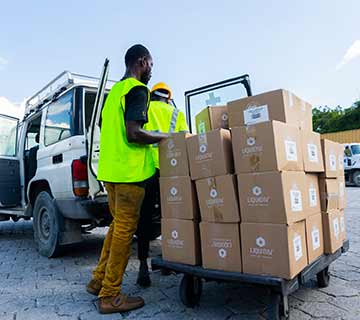
Food For The Poor also serves Haiti through donations of goods. Shipments to Haiti include items that serve basic needs as well as provide food, health care, and educational supplies.
Key Projects:
|
Childrens Homes -Notre Dame de l’Espoir-Maison d’Amour -Salesian Gressier -Foyer de l’Avenir -Little Children of Jesus -St. Louis Girls Orphanage Fishing Villages -Pierre Marie Fishing Village-Petite-Gonave Fishing Village -Petite Goave Fishing Village -Mouillage Fouquet Fishing Village ** -Lozandier Fishing Village ** -Nativity Fishing Village ** -Mole Saint-Nicolas Fishing Village -Baie de Henne Fishing Village -Lully Fishing Village -Pierre Payan Fishing Village -La Gonave Fishing Village -Port-au-Prince Fishing Village -Leogane Fishing Village -Platon Fishing Village -Petit Trou de Nippes Fishing Village -Bon Bon Fishing Village -Abricots Fishing Village -Dame Marie Fishing Village -Anse d’Hainault Fishing Village -Les Irois Fishing Village -Tiburon Fishing Village -Kafou Fishing Village -Aabacou Fishing Village -Aquin Fishing Village -Puit Sale Fishing Village -Cotes-Der-Fer Fishing Village -Bainet Marigot Fishing Village -Belle-Anse Fishing Village -Anse Aboeuf Fishing Village -Cap-Haitien Fishing Village -Bord de Mar Fishing Village -Caracol/Madr Fishing Village -Pepillo Salcedo Fishing Village Agriculture -Green Friday Tree Planting Project Feeding Centers -FFP Warehouse Feeding
Program |
Housing & Community Development -Haiti General Housing Water -Cap-Haitien Water Wells Education -Caring House School in Gonaives Aquaculture -Mouillage Fouquet Tilapia Ponds Animal Husbandry -Santo Chicken Coop Medical -FFP Warehouse Clinic |