Donate Now
Home About Us How to Help Gift Catalog Goods In Kind Church and School Mission Trips Newsroom Web Features
Printer Friendly
Email
Blogger Twitter Facebook
Please Help

Haiti

Haiti Country Flag Haiti Map

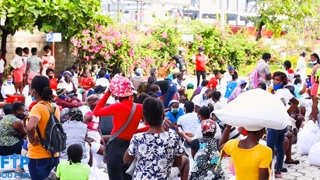
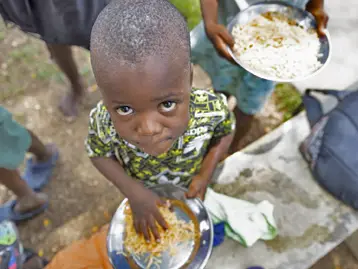
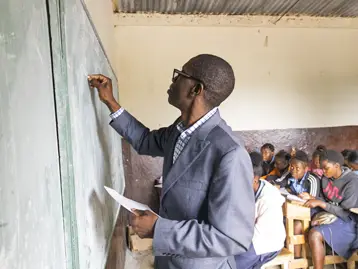
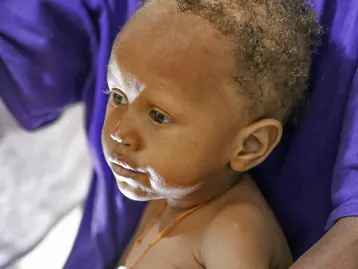
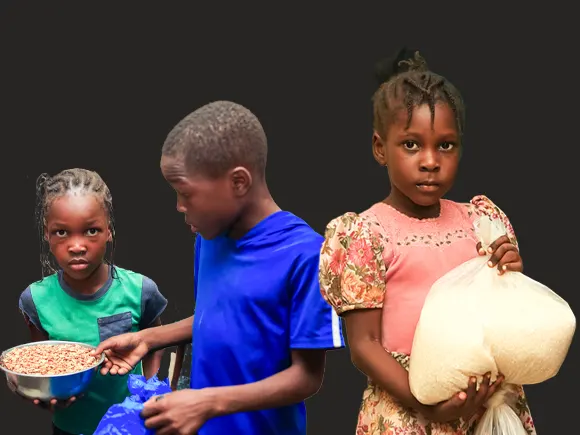
Haiti has long been considered the poorest country in the Western Hemisphere. Today, the vast majority of Haitians live at the lowest economic level and many suffer from a lack of food and medical care. An estimated 80 percent live in abject poverty. More than half of the population, including two-thirds of the children, suffers from malnutrition. About 76 of every 1,000 children die before reaching their fifth birthday. Haiti’s mortality rate is about 13 people per 1,000; its birth rate is more than double that, at about 36 people per 1,000. Life expectancy is 51 years for men and 54 years for women. Nearly a quarter of the country’s rural families have no land at all, and Haiti must import nearly a quarter of its overall food supplies. Lack of usable water has become a major problem. Clean water for drinking, cooking and bathing is in short supply, so the instance of waterborne diseases, such as diarrhea, is high. Schools are clustered in cities, so children who live in remote areas do not receive even a basic education. Haiti’s literacy rate is about 53 percent.


Food For The Poor Projects in Haiti

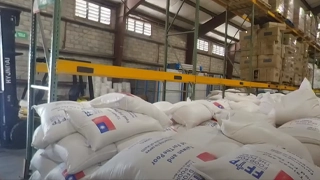
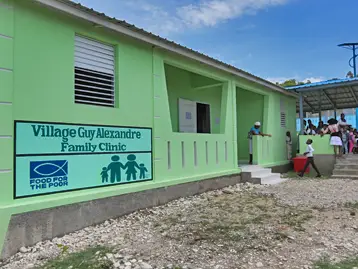
Food For The Poor has 222 projects underway in Haiti and another 464 that have been completed since 1996. Key projects focus on different aspects of development:

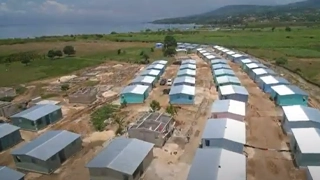
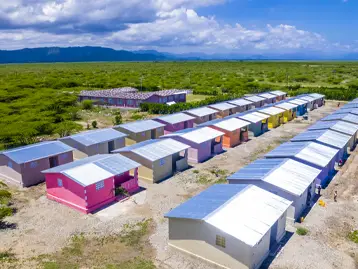
  • Through 2008, more than 8,000 single-unit houses have been built.
  • There are 35 water and sanitation projects under construction.
  • Food For The Poor works with five orphanages as part of the Angels of Hope program.

Fast Facts Page
View FFP Projects Map


General Information - Haiti

  • Area - 10,714 square miles (slightly smaller than Maryland)
  • Population - 9,035,536
  • Capital - Port-au-Prince
  • Independence Day, 1 January (1804) from France Flag Day, May 18
  • Languages - (French and Creole)
  • Religion - Roman Catholic 80%, Protestant 16% (Baptist 10%, Pentecostal 4%, Adventist 1%, other 1%), none 1%, other 3%
  • Currency - Gourde (HTG) 40 gourdes = $1 US
  • Unemployment - 66% (2002 est.)
  • Literacy rate - Total population: 52.9% | Male: 54.8% | Female: 51.2% (Defined: People age 15 and over who can read and write), (2003 est.)


Haiti Demographics


By Age: (2009 est.)

0-14 years: 38.1% (male 1,735,917/female 1,704,383)
15-64 years:58.5% (male 2,621,059/female 2,665,447)
65 years and over: 3.4% (male 120,040/female 188,690)


Infant Mortality: (2009 est.)

Total: 59.69 deaths/1,000 live births
Male: 66.18 deaths/1,000 live births
Female: 53.01 deaths/1,000 live births


Median Age: (2008 est.)

Total: 20.2 years
Male: 19.7 years
Female: 20.7 years


Life Expectancy: (2009 est.)

Total population: 60.78 years
Male: 59.13 years
Female: 62.48 years


Haiti History


In the early 17th century, the French established a presence on Hispaniola, and in 1697, Spain ceded to the French the western third of the island, which later became Haiti. The French colony, based on forestry and sugar-related industries, became one of the wealthiest in the Caribbean, but only through the heavy importation of African slaves and considerable environmental degradation. In the late 18th century, Haiti’s nearly half million slaves revolted under Toussaint L’ouverture. After a prolonged struggle, Haiti became the first black republic to declare its independence in 1804. The poorest country in the Western Hemisphere, Haiti has been plagued by political violence for most of its history. After an armed rebellion led to the forced resignation and exile of President Jean-Bertrand Aristide in February 2004, an interim government took office to organize new elections under the auspices of the United Nations Stabilization Mission in Haiti (MINUSTAH). Continued violence and technical delays prompted repeated postponements, but Haiti finally did inaugurate a democratically elected president and parliament in May of 2006.


Champion Connect Send eCards Pray Donate Learn More